You are tired of hearing that you should save 20% of your income. You look at your salary — if you even have a regular salary — and you wonder who these financial experts are talking to. After rent, transport, food, and the inevitable family requests, there is nothing left to save. The advice feels like it was written for someone in a different country, with a different life, and a completely different bank account.
But here is the uncomfortable truth: the problem is not that you are bad with money. The problem is that you have been given a savings formula that does not fit your reality. The person telling you to save 20% probably does not have to factor in the cost of running a generator for six hours a night, paying for private water, or sending money home to parents. Those are not luxuries — they are survival costs.
So let us talk about what actually works when your income barely covers the basics. Let us talk about micro-savings.
Why the 20% Rule Does Not Work for You
In Nigeria, Kenya, or Ghana, basic needs often eat up 60–70% of take-home pay. Power, water, transport, food, and housing costs are proportionally higher than in developed countries. If you try to force your spending into a neat 50/30/20 budget, you will either lie to yourself about what is a "want" or give up entirely.
The standard advice assumes a few things that do not hold in most African countries: reliable electricity, universal healthcare, stable currency, and no extended family obligations. Remove those assumptions and the math changes fast.
Take a Nigerian earning ₦500,000 per month. After tax, pension, and NHF, you are already down to about ₦400,000. Then there is generator fuel — easily ₦30,000–50,000 monthly in cities with poor power. Private health insurance, water delivery, and family requests follow. Those are not wants—they are needs. By the time you finish, there is nothing left for the 20% savings target.
In Accra, rent can consume 30–50% of income. Food inflation affects daily market purchases. Extended family support is often expected. And for many households, income is unpredictable. That makes savings feel impossible.
But irregular income does not mean irregular discipline. Savings begin with systems, not salary size.
The Emotion You Do Not Say Out Loud
Let us name what you are probably feeling but may not openly admit.
Guilt. You know you should save. Your parents told you. Your pastor told you. Every financial article tells you. But you cannot, and you feel like you are failing.
Shame. You look at friends who seem to have it together — who travel, who buy things, who post on social media — and you wonder what is wrong with you.
Fear. What happens if there is an emergency? What happens if you lose your job? What happens if someone in your family gets sick?
Resentment. You work hard. You are not lazy. But the money just does not stretch far enough, and you are tired of being told to "work harder" as if that is the answer.
Confusion. You have tried to save before. You put money aside, but then something came up — a funeral, a school fee, a broken phone — and the savings disappeared. You wonder if it is even worth trying again.
Here is what you need to hear: you are not alone, and you are not the problem. The system is designed to make saving difficult when you earn little. But that does not mean saving is impossible. It just means you need a different approach.
What Micro-Savings Actually Means
Micro-savings is not about saving big amounts. It is about saving small amounts, consistently. Instead of aiming for GHS 1,000 a month when you earn GHS 2,500, you start with GHS 5–10 per day. Instead of trying to save ₦50,000 a month, you save ₦500 a day.
Small, consistent savings grow faster than large, inconsistent ones. The key principle is to automate the habit before increasing the amount.
Think about it this way: GHS 5 a day is GHS 150 a month. That is not nothing. In a year, that is GHS 1,800. ₦500 a day is ₦15,000 a month — ₦180,000 a year. That is money you did not have before. That is an emergency fund. That is a business investment. That is a safety net.
The goal is not to save a life-changing amount immediately. The goal is to build the discipline so that when bigger money eventually comes, you already know how to save.
How to Actually Do It: Practical Steps
1\. Start with What You Can — Not What You Should
Forget 20%. Forget what the experts say you should save. Start with what you can save.
If you can save 5% of your income, save 5%. If you can save GHS 5 a day, save GHS 5. If you can save ₦500 a day, save ₦500.
The amount does not matter as much as the consistency. Saving GHS 5 every single day is more powerful than saving GHS 150 once and then stopping.
2\. Pay Yourself First
One of the biggest mistakes low-income earners make is saving "what is left." There is rarely anything left.
Instead, adopt the pay-yourself-first method: when income enters your account or hand, immediately move your savings portion, then live on the remainder.
This is not easy. It requires discipline. But it is the single most important habit you can build.
3\. Use Mobile Money to Separate Savings from Spending
Mobile money has transformed the way people handle their finances in Africa. It is not just for sending money anymore — it is a versatile financial tool that can help you save, budget, and plan for the future.
Most mobile money providers allow you to create sub-accounts or wallets specifically for saving. Separating your savings from your spending money helps reduce the temptation to dip into it. You could label a wallet "Emergency Fund" or "Business Fund" and deposit a fixed amount regularly.
In Ghana, MTN Mobile Money makes this easy. In Kenya, M-Pesa offers similar features. In Nigeria, PiggyVest and Cowrywise offer locked savings features that enforce discipline. The convenience is unmatched — you do not need a physical bank branch, long queues, or extensive documentation.
4\. Set Up Automatic Transfers
Consistency is key to saving. Most mobile money platforms offer options to schedule automatic transfers from your main account to your savings wallet. Even a small amount, like GHS 5 or ₦500 a day, can add up over time.
Automation removes the need to remember each day, making saving effortless. You do not have to think about it. The money moves automatically, and you learn to live on what remains.
5\. Join a Susu Group or Rotating Savings Group
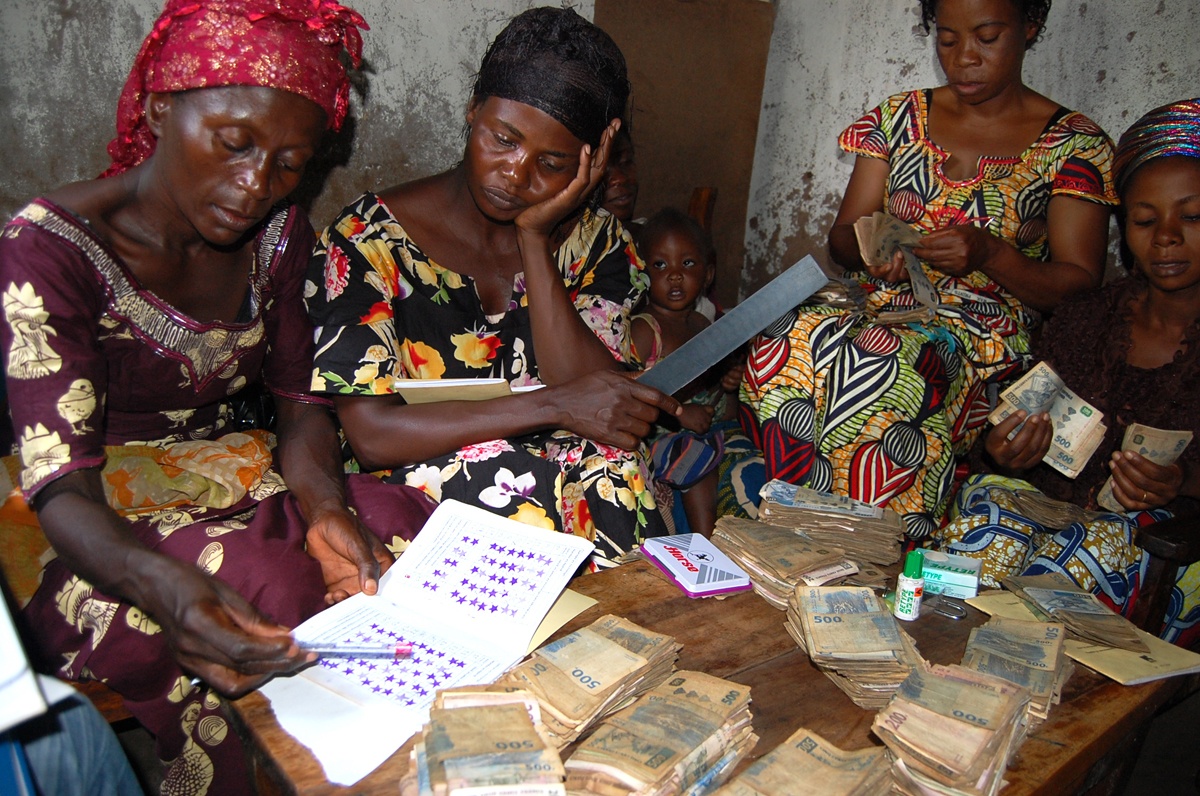
This is one of the oldest and most effective savings methods in Africa. Susu groups are informal savings circles where members contribute modest sums regularly. The pooled money is then given to each member in turn or used for mutual support.
In Ghana, Susu groups are primarily led by women and serve as platforms for mutual aid, emergency support, and community investment. In Nigeria, similar groups are called Esusu. In Kenya, they are known as Chamas.
The beauty of these groups is social accountability. When you know others are counting on you, you are more likely to save. And when you receive your lump sum, you have a meaningful amount to work with.
In some communities, mobile money has made these groups even more efficient — you can now contribute digitally, reducing the risk of carrying cash and making coordination easier.
6\. Use Goal-Based Savings Features
Some mobile money services now feature goal-based savings. You can define a target amount and a timeline, and the system will help you track your progress. This gamified approach can motivate you to save more consistently and reach your goals faster.
Whether you are saving for school fees, a business investment, or an emergency fund, having a clear goal makes saving feel purposeful rather than painful.
What to Do When the First Approach Fails
Here is the reality: you will try to save, and something will come up. A family member will need help. Your phone will break. Transport fares will increase. Your savings will disappear.
This does not mean you failed. This means life happened.
The key is to start again. Do not wait for the perfect month. Do not wait until you have "enough" to save. Start again with whatever you have, as soon as you can.
And here is something people do not talk about enough: sometimes you need to say no. Not to everything, not to everyone, but to some things. You cannot save if every extra coin goes to someone else. There is a difference between supporting your family and destroying your own future. Finding that balance is difficult, but it is necessary.
The Social Cost of Saving
Let us be honest about what happens when you start saving. People will notice. Family members who are used to you being available may not understand why you are suddenly "stingy." Friends may wonder why you are not joining outings. You may be perceived as selfish, difficult, or untrusting.
This is real. And it is hard.
You do not have to announce that you are saving. You do not have to explain your financial decisions to everyone. But you also do not have to cut everyone off. Sometimes the better answer is finding a sustainable way to protect your savings while maintaining important relationships.
One approach: save quietly. Do not tell everyone you are saving. Do not make it a public declaration. Keep your savings separate and private. When someone asks for money, you can honestly say you do not have it available — because you do not. It is in your savings wallet, and that money has a different purpose.
What Saving Actually Does for You
Saving is not just about having money in the bank. It is about something deeper.
It gives you options. When you have savings, you are not desperate. You can wait for a better job. You can say no to a bad deal. You can invest in an opportunity when it comes.
It gives you peace of mind. The anxiety of not knowing what will happen tomorrow is exhausting. Savings reduce that anxiety. Even a small emergency fund changes how you feel about your life.
It builds your identity. When you save consistently, you start to see yourself differently. You are not just someone who struggles. You are someone who plans. You are someone who builds. That shift in self-perception is powerful.
The Bottom Line
Saving when you earn a survival wage is not easy. It requires sacrifice, discipline, and often, saying no to things you would rather say yes to.
But it is possible.
Start small. Save what you can, not what you should. Use mobile money to separate your savings from your spending. Join a susu group for accountability. Automate your transfers so you do not have to think about it. And when life happens — when your savings disappear — start again.
The goal is not to save a fortune tomorrow. The goal is to build the habit today. Because when bigger money eventually comes — and it will — you want to be ready. You want to already know how to save. You want to already have the discipline.
Start with GHS 5. Start with ₦500. Start today.
Then keep going.
Sources & Methodology
Delviews article pages include source notes, correction links and editorial context so readers can evaluate trust at a glance.
Spotted an error? Submit a correction